


Lifestyle-Related Cancers
Alcohol-related Cancers in Mississippi, 2003-2023
Excess alcohol consumption is a modifiable risk factor that increases the risk of developing certain cancers. According to data from the Behavioral Risk Factor Surveillance System for 2024, 13.3% of Mississippi adults reported binge drinking (men having more than five drinks on one occasion and women having more than four drinks on one occasion). Mississippi is tied for the sixth lowest rate of binge drinking among the US states, District of Columbia, and Puerto Rico.1 Excessive alcohol use is associated with cancers of the lip, oral cavity, pharynx, colon and rectum, breast in females, esophagus, liver, and larynx.2 Below are graphs of the trends in alcohol-related cancers over the period 2003 to 2023 by race and sex with a description of the trends occurring in each group and a comparison of rates between groups for the most recent time period of 2019 to 2023. All analysis was done using SEER*Stat software3 and SEER's Joinpoint Regression software4.
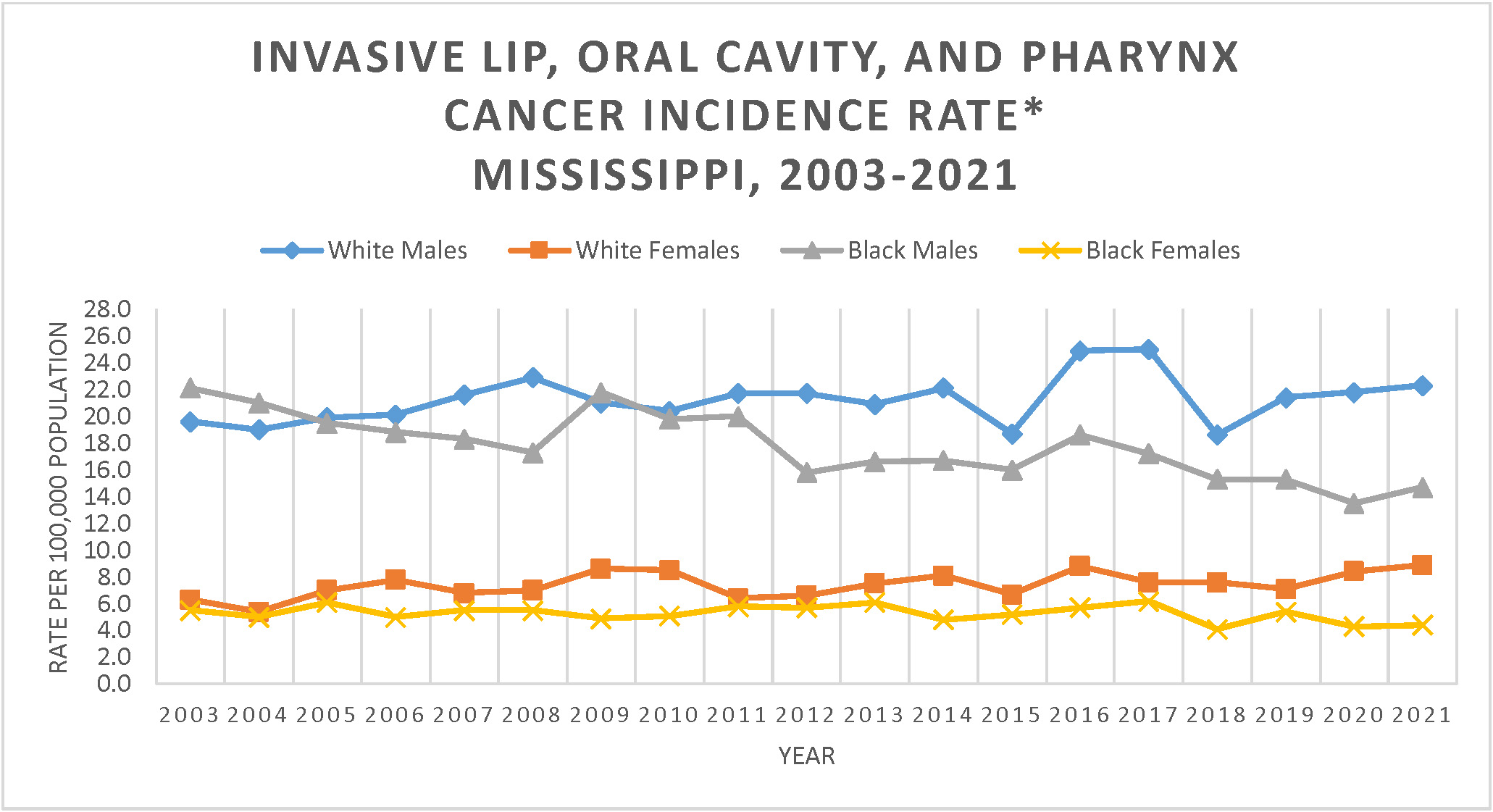
While lip, oral cavity, and pharynx cancer is associated with excessive alcohol use, it is also associated with another modifiable risk factor, tobacco use. Cancers of the oropharynx may also be associated with Human Papillomavirus (HPV) infection. Males had significantly higher rates of lip, oral cavity, and pharynx cancers than females. Over the period from 2003 to 2023, only black males and white males experienced a significant change in incidence rates. The rate for black males decreased annually by 1.69%. The rate for white males increased annually by 0.73%. The rate for black females was observed to be decreasing at an annual rate of 0.62%. The rate for white females were observed to be increasing at annual rate of 1.33%.
For the latest five-year time period of 2019 to 2023, white males and white females had a similar trend to that of the overall time period of 2003 to 2023. The rate for white males increased significantly at an annual rate of 1.36%. Though not statistically significant, the rate for white females was increasing at a rate of 4.54% annually. The rates for black males and black females were opposite of the trend for the overall time period. The rate for black males was observed to be decreasing at an annual rate of 3.10%, and the rate for black females was observed to be increasing at an annual rate of 0.75%.
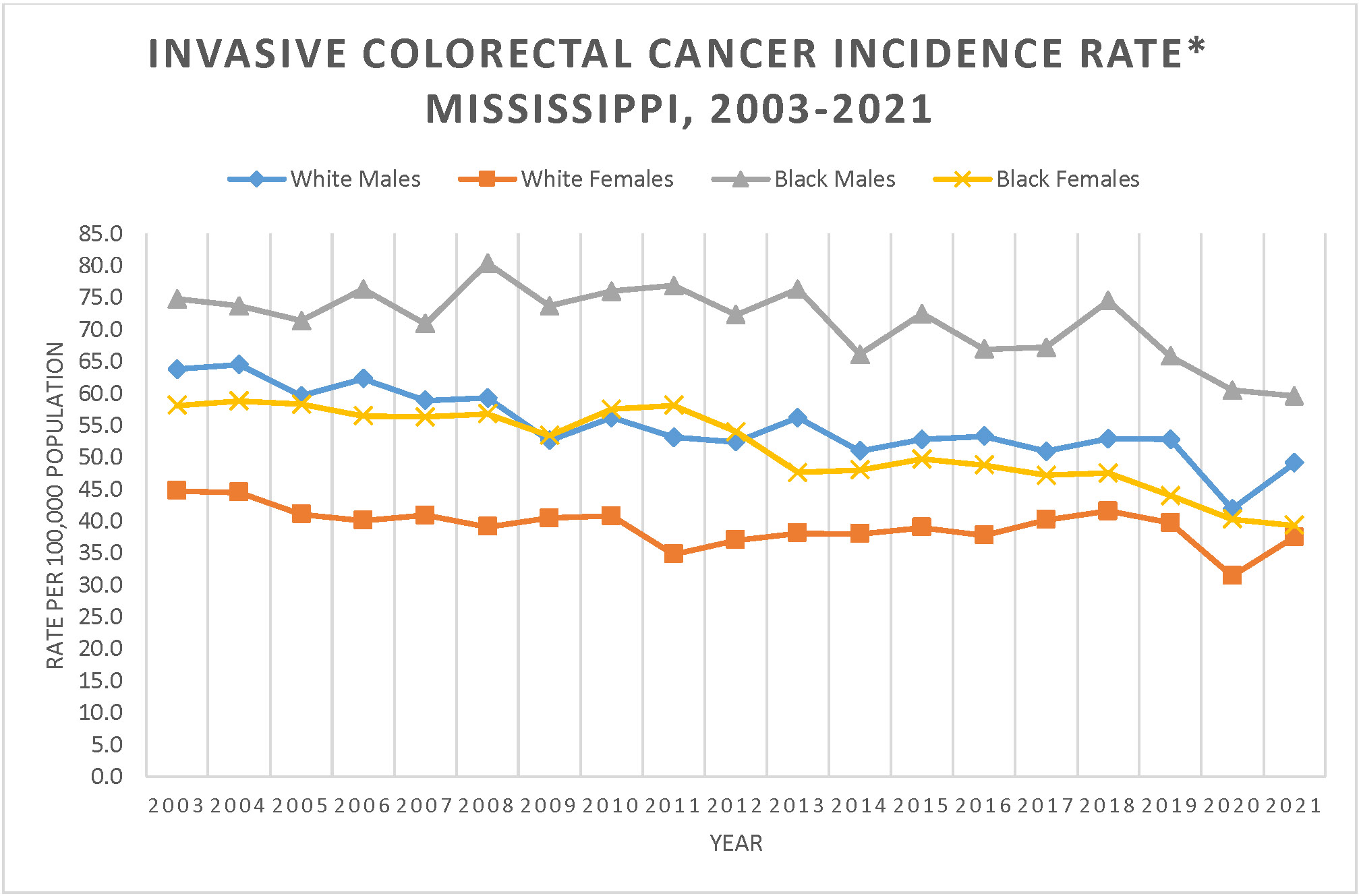
While colorectal cancer is associated with alcohol use, it is also associated with other modifiable risk factors, tobacco use (both colon and rectum cancers), obesity (both colon and rectum cancers) and lack of physical activity (only colon cancer). Black males had significantly higher rates of colorectal cancer than all other groups except for in years 2003, 2004, and 2022 where their rates were similar to those of white males. Colorectal cancer rates decreased significantly in all groups for the period between 2003 and 2023. White females had a significant decrease of 0.56% annually, and white males had a significant decrease of 1.24% annually. Black females experienced an annual observed decrease of 0.76% between 2003 and 2011, followed by a significant decrease annually of 2.70% between 2011 and 2023. These patterns translate into a significant average annual percent decrease of 1.93% for black females over the full time period. Black males had a significant decrease of 0.97% annually between 2003 and 2023.
For the latest five-year period of 2019 to 2023, white males and white females experienced an observed increase of 0.38% and 1.36%, respectively. Both black males and black females had a similar pattern in the latest five years as they had in the full time period, though the changes were not significant. The rate for black males was observed to decrease at an annual rate of 0.29% between 2019 and 2023, while the rate for black females was observed to decrease at an annual rate of 1.53%.
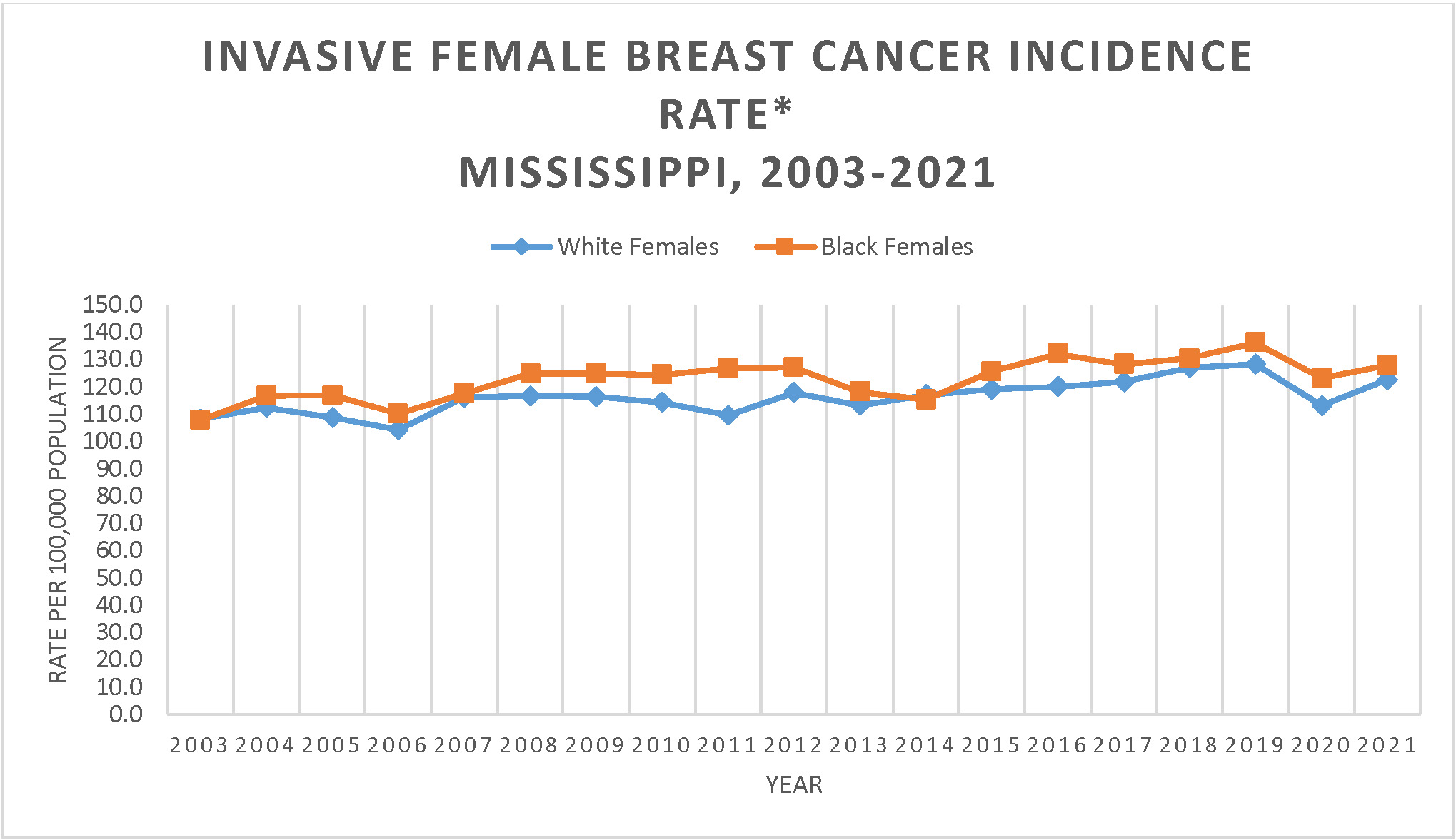
Overall, female breast cancer is associated with excessive alcohol use. In addition, post-menopausal breast cancer, which is defined as breast cancer diagnosed in women over the age of 50, is associated with both obesity and lack of physical activity. The rates of female breast cancer were similar between white and black females for most years. Both white and black females had statistically significant annual increases between 2003 and 2023. The annual percent increase over that period for white females was 0.76%, and the annual percent increase for black females was 0.71%. For the most recent five-year period between 2019 and 2023, white and black females had opposite trends to each other. For white females, the observed increase was 0.51% annually, and for black females, the observed decrease was 0.75% annually.
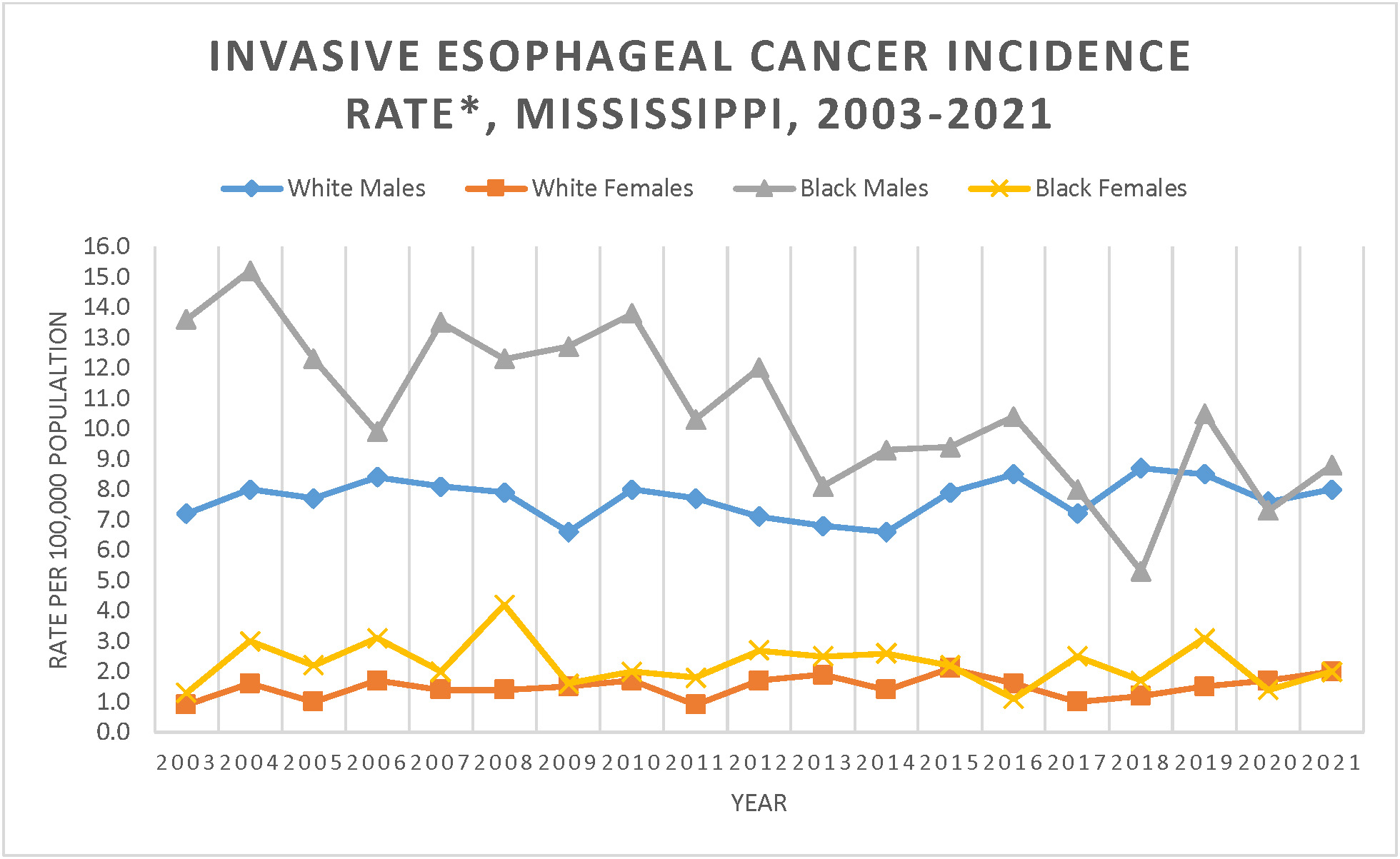
While esophageal cancer is associated with excessive alcohol use, it is also associated with another modifiable risk factor, tobacco use. Additionally, adenocarcinoma of the esophagus can be associated with obesity. Males had significantly higher rates of esophageal cancer than females. The rates were similar by race for females and similar for males beginning in 2013. The annual percent change over the period from 2003 to 2023 for black males was statistically significant. For black males, the annual percent decrease was 3.17%. The rate for black females decreased at an observed annual rate of 1.13%. In contrast to black males and females, the rates for white males and white females increased, though the changes were not statistically significant. The rate for white females increased 1.52% annually, and the rate for white males increased 0.42% annually.
For the latest five-year time period of 2019 to 2023, white females and black females had a similar trend to what was observed for the full time period of 2003 to 2023. The trend for 2019 to 2023 for white females was an annual increase of 2.23% and for black females was an annual decrease of 4.47%, neither of which were statistically significant. For black males, the trend for the most recent time period was similar of the full time period from 2003 to 2023 but not statistically significant. For 2019-2023, black males experienced an observed decrease of 6.32% annually. White males, opposite of the full time period, experienced a decreasing trend, though the change was not statistically significant. For 2019-2023, the rate for white males decreased at a rate of 0.13% annually.
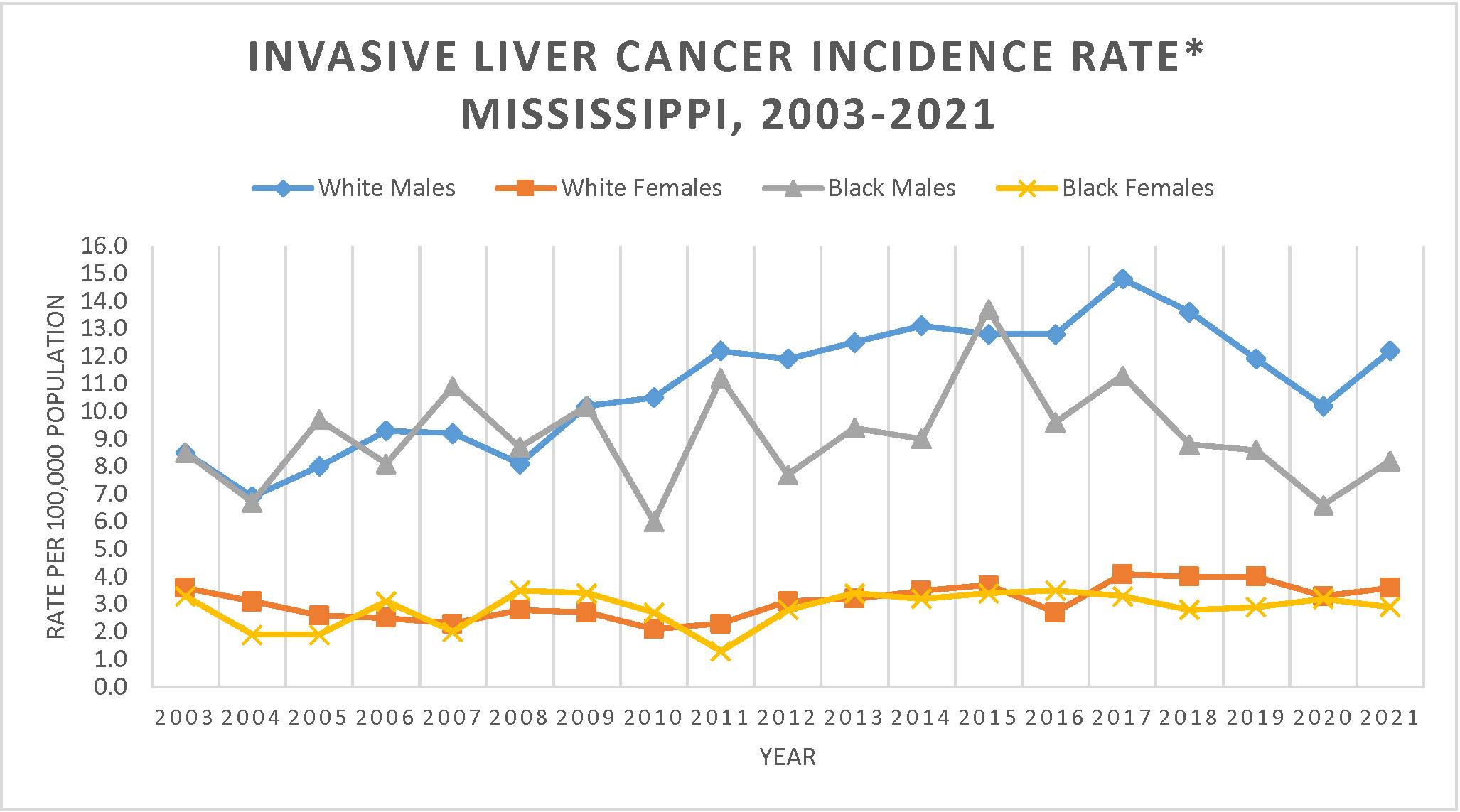
*Rates age-adjusted to the 2000 U.S. standard million population. Invasive liver cancer incidence rate image long description.
While liver cancer is associated with excessive alcohol use, it is also associated with two other modifiable risk factors, tobacco use and obesity. Males had significantly higher rates of liver cancer than females. The rates were similar between the races for females and for males prior to 2012. Beginning in 2012, white males had significantly higher rates than black males for many of those years. For white males, the incidence rate increased significantly between 2003 and 2016 at a rate of 5.02% annually. Between 2016 and 2023, the rate for white males decreased at a rate of 2.80% annually, though this change was not statistically significant. The rate for white females showed an annual decrease of 11.38% from 2003 to 2006, but then showed a significant increasing trend from 2006 to 2023 with an annual increase of 3.39%. The observed annual percent increase for black females was 1.07%. Between 2003 and 2017, the rate for black males increased at an observed rate of 2.31%, but then showed a significant decrease of 8.22% annually between 2017 and 2023.
For the latest five-year period of 2019 to 2023, trends were decreasing for all groups except white males. None of the changes were statistically significant. For white males, the trend for the last five-year period was an increase of 0.85% annually, and for black males, the most recent trend observed was a decrease of 3.28% annually. For black females, the decrease was 2.74% annually, and for white females, the decrease was 0.28% annually.
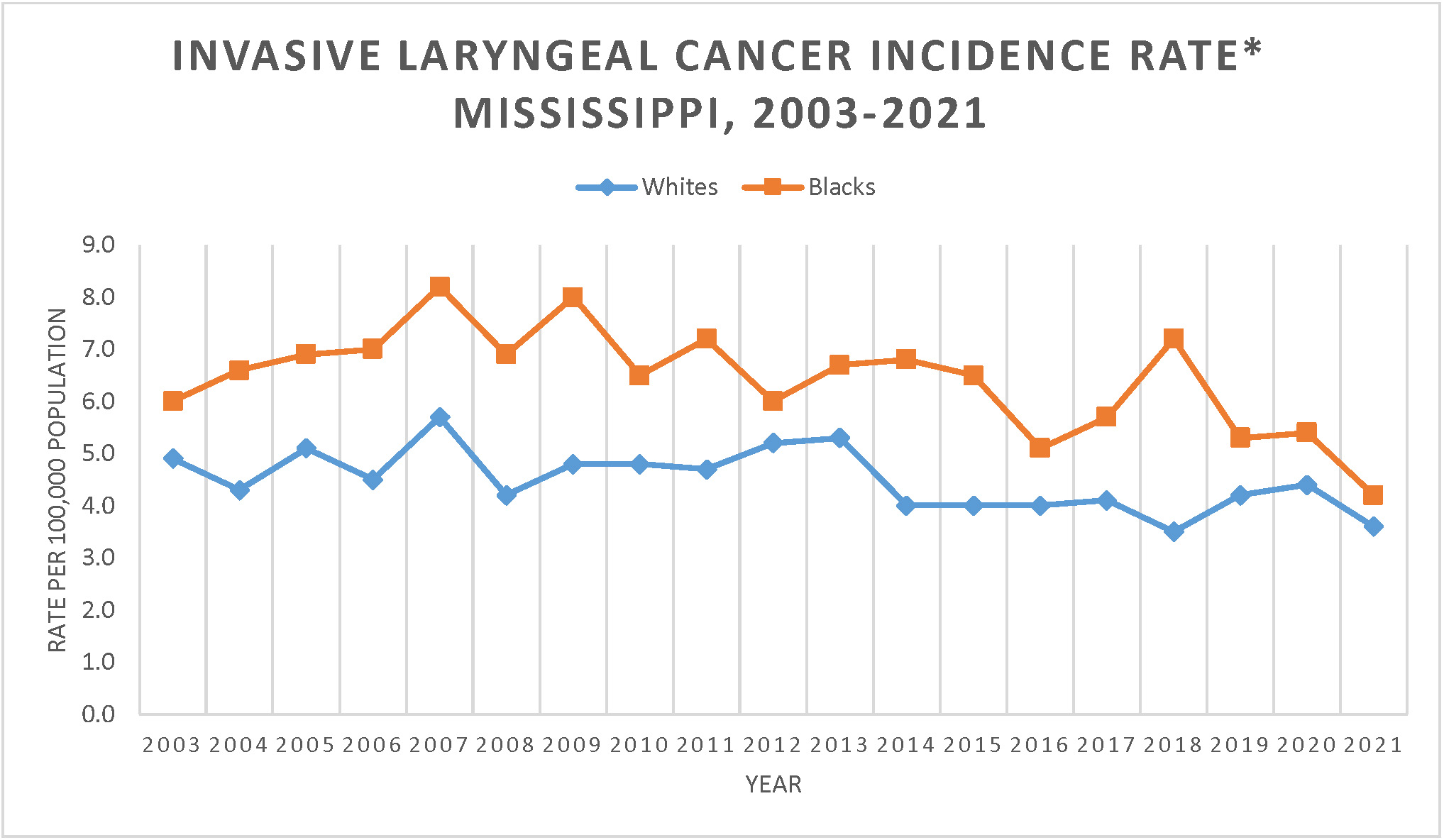
*Rates age-adjusted to the 2000 U.S. standard million population. Invasive laryngeal cancer incidence rate image long description.
While laryngeal cancer is associated with excessive alcohol use, it is also associated with another modifiable risk factor, tobacco use. Laryngeal cancer is a relatively rare cancer. Thus, the rates could not be broken down by both race and sex. This graph only displays the rates by race. Over the period from 2003 to 2023, the annual decrease for the white population was 1.05%, though not statistically significant. For the black population, between 2003 and 2007, there was an annual observed increase of 7.73%. Between 2007 and 2023, the black population experienced a statistically significant decrease of 3.20% annually. For the latest five-year time period of 2017 to 2023, the black population and white population saw decreasing trends. These trends were only statistically significant for the black population. For the black population, the trend was an annual decrease of 5.21%, and for the white population, the trend was an annual decrease of 1.81%.
Definitions
Age Adjusting: A statistical method that allows comparisons of populations that take into account age-distribution differences between the populations. The 2000 U.S. standard population is used and applied to all of the time periods being considered. This assures that the rates do not reflect differences in the age distribution of the population.
Annual Percent Change (APC): The average annual percent change over several years. It is used to measure the change in rates over time. Calculating the APC involves fitting a straight line to the natural logarithm of the data when it is displayed by calendar year.
Statistical Significance: This is a mathematical measure of the difference between groups. A difference is said to be statistically significant if it is greater than what might be expected to happen by chance alone 95% of the time. Rate ratios were used to assess the statistical significance between groups.
Citations
1Centers for Disease Control and Prevention, National Center for Chronic Disease Prevention and Health Promotion, Division of Population Health. BRFSS Prevalence & Trends Data [online]. 2025. [accessed Wed, 10 Jun 2026 14:10:12 GMT]. URL:https://www.cdc.gov/brfss/brfssprevalence/.
2Division of Cancer Prevention and Control, Centers for Disease Control and Prevention. Alcohol and Cancer [online]. 2026. [accessed June 10, 2026]. URL: https://www.cdc.gov/cancer/risk-factors/alcohol.html.
3Surveillance Research Program, National Cancer Institute SEER*Stat software (seer.cancer.gov/seerstat) version 9.0.43.0.
4Surveillance Research Program, National Cancer Institute (2026). Joinpoint Regression Software, Version 6.0.1 - March, 2026. https://surveillance.cancer.gov/joinpoint/.
Source of Data: SEER*Stat 4Database: MS0223. Created on 1/9/2026. Mississippi Cancer Registry 2025 Submission (2002-2023) to Centers for Disease Control and Prevention, National Program of Cancer Registries.
Acknowledgement
We acknowledge the Centers for Disease Control and Prevention National Program of Cancer Registries for their financial support under a cooperative agreement awarded to the Mississippi Cancer Registry, as well as the University of Mississippi Medical Center's Cancer Center and Research Institute for their financial support.